
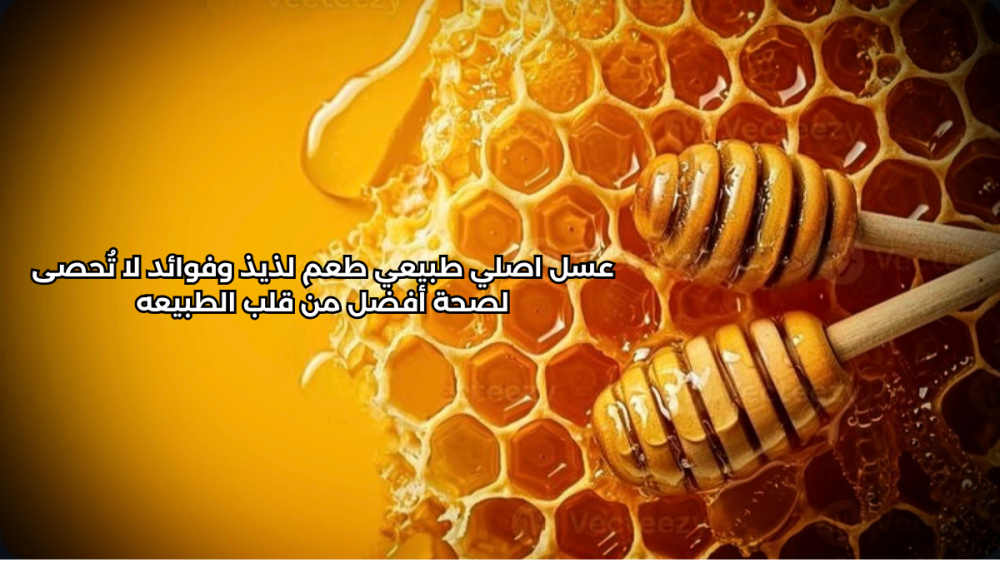
Pure, natural honey is not just a sweetener that adds flavor to your meals; it's a nutritional treasure that combines a captivating taste with amazing health benefits. It's a golden liquid extracted from the heart of pure nature, where bees gather flower nectar and transform it into a rich blend of minerals, vitamins, antioxidants, and vital enzymes that give you energy and vitality in every spoonful.
Consuming pure, natural honey daily not only gives you a wonderful taste, but also provides your body with nutrients that contribute to boosting your daily energy and maintaining your overall health. From the heart of nature, natural honey offers an easy path to enhancing your health and quality of life, allowing you to discover for yourself the secret to energy and well-being in this complete food.
What is natural honey and what are its components?
Natural honey is:
Honey is a sweet, sticky substance produced by bees from the nectar of flowers and plants. Bees collect this nectar and transform it within their bodies through organized processes and specialized enzymatic activity. After the water evaporates, they store it in wax cells, resulting in the thick, nutrient-rich honey we know today. Honey is not just a natural sweetener; it is a nutritional treasure trove containing over seventy different substances of vital importance, making it both food and medicine.
Genuine, natural honey varies in color, taste, and aroma depending on the bees' food source, the geographical region, and environmental factors. Honey derives its sweetness from monosaccharides such as fructose and glucose, and has a similar relative sweetness to sucrose, commonly known as cane sugar. Furthermore, most microorganisms do not grow in honey, allowing it to be stored for extended periods without spoiling.
Ingredients of natural honey:
Natural honey consists of a complex and balanced composition of beneficial nutrients. Its primary components are water and carbohydrates (82%), with carbohydrates making up the largest portion, consisting of fructose (38.2%) and glucose (31%). It also contains disaccharides such as sucrose, maltose, and isomaltose (approximately 9%), and oligosaccharides (4.2%). The water content in honey ranges from only 15-20%.
The benefits of natural honey: energy and vitality in every drop.
Natural honey is considered one of the most beneficial foods for health, and it has numerous daily, nutritional, and medicinal uses thanks to its rich composition of vital elements. Here are its most prominent benefits:
1. Boosting immunity and fighting diseases:
- Pure, natural honey contains antioxidant compounds such as flavonoids and phenolic acids, which protect the body from free radicals and strengthen the immune system.
- It has antibacterial and antimicrobial properties, making it helpful in preventing infections and inflammations.
2. A source of quick and healthy energy:
- It is rich in easily absorbed simple sugars (glucose and fructose), providing the body with immediate energy, unlike artificial sugars.
- It is recommended for athletes, students, and people who need a natural and fast source of energy.
3. Supports digestive health:
- Honey is used to soothe stomach problems and relieve inflammation, and to help heal stomach ulcers.
- It acts as a gentle laxative and helps treat constipation when used regularly.
4. Wound healing and burn treatment:
- It is used topically to accelerate the healing of superficial wounds and burns due to its antibacterial and cell regeneration properties.
- It is included in some medical care products for the treatment of chronic wounds.
5. Soothes coughs and sore throats:
- Effective in reducing and clearing the throat of phlegm, and reduces the severity of coughing, especially in children older than one year.
- Honey can be mixed with ginger or lemon for better results.
6. Improve skin and hair health:
- It is used in skincare recipes to moisturize and give it freshness thanks to its content of vitamins, minerals and anti-inflammatories.
- It is used in natural hair masks to give it shine and strengthen the roots.
7. Reducing the risk of heart disease:
- The antioxidants in honey help reduce levels of bad cholesterol in the blood and improve the health of blood vessels, which contributes to protecting the heart.
8. Supporting mental health and improving mood:
- Consuming honey contributes to the production of serotonin, which supports brain health, provides a sense of well-being, and improves sleep quality when consumed shortly before bedtime.
Methods of distinguishing genuine honey from adulterated honey
Distinguishing between genuine and adulterated honey is crucial to fully benefiting from its health advantages. Here are some of the most common methods to help you determine the quality of honey before buying or consuming it:
1. Testing of consistency and density:
- Original natural honey is characterized by a thick consistency and does not easily run from the spoon, and forms long threads when drawn.
- Adulterated honey is often noticeably soft or runny due to the addition of water or other substances.
2. Water solubility test:
- Place a spoonful of honey in a glass of cold water without stirring:
- Genuine honey: It settles at the bottom first and does not dissolve immediately, then it begins to dissolve gradually.
- Adulterated honey: It dissolves quickly and spreads easily in water.
3. Smell and taste test:
- Natural honey has a strong, aromatic floral scent and a uniquely rich taste that reflects the source of its plant nectar.
- Adulterated honey often has a mild or artificial smell, and a superficial or purely sugary taste.
4. Crystallization (granulation) test:
- Over time, pure honey crystallizes (partially solidifies or develops small crystals), and this is normal and safe for consumption.
- The adulterated substance remains liquid for long periods without crystallizing due to the addition of inhibitors or solvents.
5. The flame test (matchstick):
- Dip the head of a matchstick in honey and then try to light it:
- If it ignites easily, the honey does not contain excess water (genuine).
- If it does not ignite, the honey is likely adulterated or mixed with water.
6. Testing blotting paper or tissues:
- Place a drop of honey on a blotting paper or tissue:
- Original: It remains stable and does not spread or absorb quickly.
- The adulterated one: spreads quickly and stains the paper; because it contains a high percentage of water.
7. Purchase from a reliable source:
- It is preferable to buy honey from well-known apiaries or companies that provide laboratory certification of product purity and quality.
- Avoid honey that is packaged informally or sold with enticing offers without proof of quality.
Uses of natural honey in your daily life
Natural honey is not only a delicious food, but also a versatile ingredient that can enrich your daily life with its health, nutritional, and beauty benefits. Here are some of the most practical ways to use honey every day:
1. Take it in the morning with warm water:
- Start your day with a spoonful of honey dissolved in a cup of warm water to boost immunity , regulate digestion, and naturally increase physical energy.
2. Sweetening beverages and foods:
- Pure, natural honey used as a healthy alternative to sugar in tea, coffee, juices, and even green smoothie or detox recipes.
- Add it to yogurt or oatmeal with nuts and dried fruit for a rich and nutritious breakfast.
3. In cooking and dessert recipes:
- Incorporate honey into your pastries, cakes, meat sauces or salad dressings to give them a distinctive flavor and double the health benefits.
- It can be used to sweeten breakfast cereals instead of artificial sugar.
4. Natural remedies for coughs and sore throats:
- Honey relieves coughs and throat irritation; mix a spoonful of honey with lemon juice or a piece of ginger and take it as needed.
5. Strengthening the immune system:
- Taking a teaspoon daily helps support the body's defense systems and fight infection.
6. Cosmetic uses for skin and hair care:
- Use honey as a moisturizing face mask: apply it alone or mixed with olive oil or yogurt and leave it on for 10 minutes, then wash it off.
- You can add it to hair mixtures to increase shine, nourishment, and soothe the scalp.
7. Treatment of superficial wounds and minor burns:
- Natural honey is known for its antibacterial and healing-accelerating properties; apply it directly to small wounds (after cleaning them) to speed up healing and prevent infection.
8. Supports digestive health:
- It acts as a gentle, natural laxative, and helps relieve stomach acidity and digestive upset when taken regularly.
9. Promoting children's health (for ages over one year):
- Honey provides them with energy and nutrients, and helps in It strengthens the immune system , but it is prohibited to give it to those under one year old.
10. Calming the nervous system and improving sleep:
- Taking a teaspoon of honey half an hour before bedtime may help you relax and get a peaceful sleep.
Tips for the safe and effective use of natural honey
To get the most benefit from natural honey and ensure the safety of all family members, the following tips should be observed when handling and consuming honey:
1. Avoid giving honey to children under one year old:
- It is strictly forbidden to give honey to children under one year old, because it may contain Clostridium botulinum bacteria that can cause botulism in them.
2. Moderation in consumption:
- Consuming healthy honey should be done in moderation; the appropriate dose for a healthy person ranges from one to three tablespoons daily, as needed.
- Excessive consumption of honey may lead to increased calorie intake and elevated blood sugar levels, especially for those suffering from diabetes or obesity.
3. Avoid heating honey to high temperatures:
- Heating honey to more than 40°C (104°F) causes a significant loss of its natural enzymes and antibiotics, so it is preferable to add it to foods and drinks after it has cooled down a little.
4. Check the source and quality of the honey:
- Make sure to buy genuine, natural honey from reliable sources, certified apiaries, or companies that provide quality certificates and laboratory testing.
- Avoid honey that is packaged using traditional methods or from an unknown source, as some varieties may be adulterated or mixed with other substances.
5. Monitoring for allergic reactions:
- People who are allergic to bee products or pollen should try honey cautiously the first time, or consult a doctor if they experience any abnormal symptoms.
6. Proper storage of honey:
- Natural honey should be stored in a dry, cool place away from direct light, preferably in tightly sealed glass containers, which helps to preserve its quality for as long as possible.
- Do not put honey in the refrigerator so that it does not crystallize too quickly.
7. Avoid mixing honey with medications without consulting a doctor:
- It is not recommended to mix honey with medicines or medicinal herbs without consulting a specialist, as it may affect the effectiveness of some of them or cause drug interactions.
8. Use topically with caution:
- Honey can be used topically for minor wounds or burns, but thorough cleaning and consulting a doctor are recommended for deep or chronic wounds.
Check out more articles from the original Alwan Honey Store :
Selected natural honey blends with amazing benefits to boost your health .
Honey Taste for Weight Gain: A healthy and safe way to gain weight .
Your diet of honey and nuts is the secret to healthy and natural weight gain .